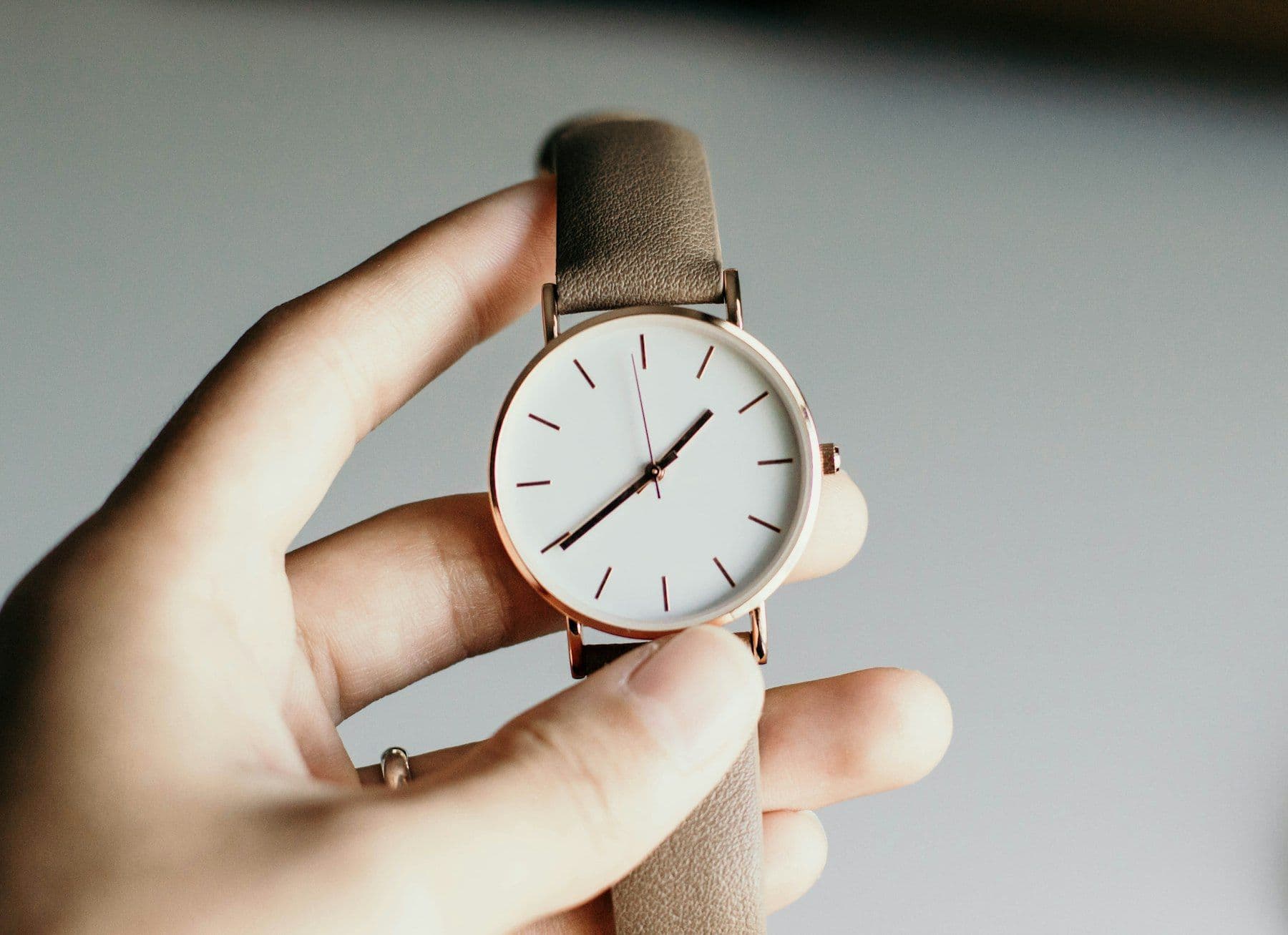
Through the 2000s and 2010s, men's watches grew steadily: 42mm, 44mm, 46mm, each one a little more like a piece of equipment. Women's watches, meanwhile, were often reduced to jewellery. In 2026, both have converged on a middle ground — the 36 to 38mm case that sits flat on the wrist and slides under a cuff.
Proportion over presence
A watch that fits looks better than one that dominates. Smaller cases sit closer to the wrist, follow the line of the arm and work with tailoring as easily as with a sweatshirt. It is the same logic that has made clothes more relaxed: when things fit properly, they don't need to shout.
A watch you'll wear every day
The practical argument for a small, simple watch is that you will wear it. It goes with everything, doesn't catch on sleeves and doesn't need explaining. That makes it one of the rare accessories that genuinely earns its cost-per-wear.